Contents
How to Use Combat Training Effectively and Improve Your Results

![[Hero Wars Guide]Guild Wars](https://h-w.fun/en/wp-content/uploads/sites/2/2026/01/Hero-Wars-Guide-Guild-Wars-Strategy_10.jpg)
Below are some practical tips for getting the most out of Combat Training.
Common Concepts
Understand Differences in the Game Engine
- Hero Wars uses a battle processing engine, so outcomes can change—even for the same matchup—when game versions are updated.
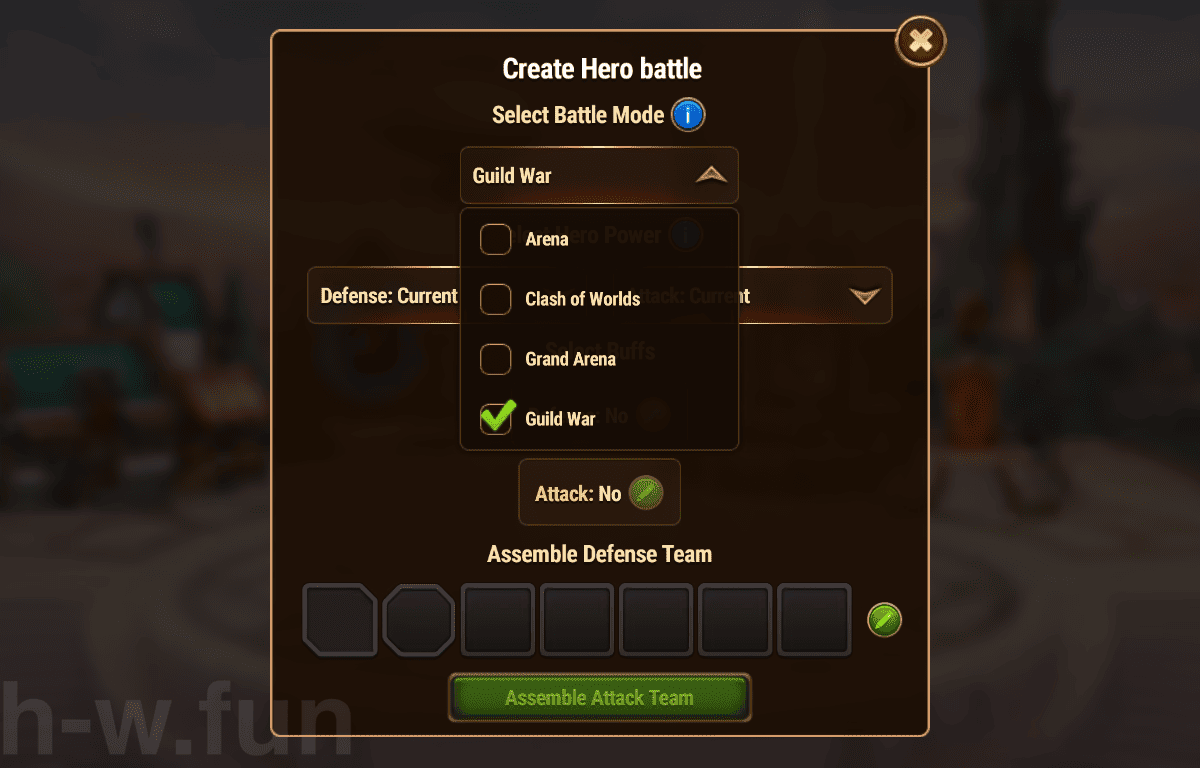
- Mode-specific settings such as Guild War and Clash of Worlds (CoW), both available in Combat Training, are especially important.
- Simply changing the mode can turn a guaranteed win into a loss in some situations.

When Combat Training Has Limited Value
- For attack patterns you consistently win, Combat Training adds little value. In these cases, flags, Patterns, and fusions often play a more decisive role.
- When you are new to the game, it is generally better to trust real battle results over Combat Training simulations.
- At this stage, power and level differences outweigh matchup nuances.
- Relying on tier lists and advice from experienced players is more reliable early on.
- Veteran Arena players tend to dominate during this phase.
The Impact of Power Differences
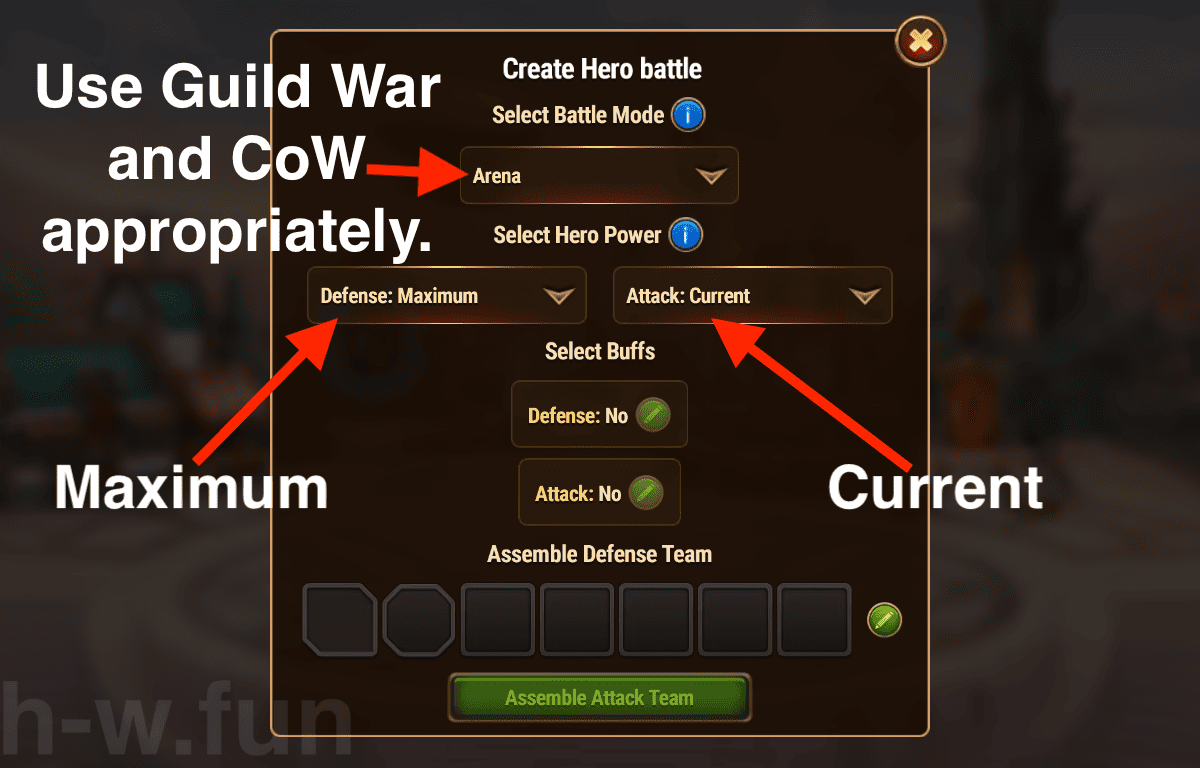
- After two to three years of play, setting your opponent’s power to maximum while keeping your team at current power produces reasonably accurate results in most cases.
- “Most cases” does not mean zero deviation.
- Against players who optimize defenses beyond standard max power, win rates tend to drop.
- In practice, real battle win rates are often lower than Combat Training results. This discrepancy is commonly referred to as “friction.”
- Early on, you can only test at maximum power.
- While imperfect, this is still far better than not testing at all.
- Even small power differences can dramatically affect outcomes, so treat results as guidance—not guarantees.
Emphasize Conceptual Thinking
- Combat Training is ineffective when used randomly. Blind testing leads to frustration and burnout.
- First, analyze the enemy team and design a plausible counter. Then check whether your team has proper internal synergy.
- Good planning reduces the number of revisions needed.
- Combat Training is most valuable when results differ from expectations, revealing hidden weaknesses.
- In hero battles, understanding counter mechanics is essential.
- For example, attacking Isaac with a magic team rarely produces good results.
- In titan battles, account for elemental matchups and timing, such as Light Totem activation.
- A battle that looks winnable may fail if your Light/Dark Totem activates slightly earlier than your opponent’s.
When You Cannot Form a Winning Concept
- Sometimes, testing reveals that you simply cannot win.
- In these cases, study battle logs from strong players.
- Spending a few minutes reviewing logs is more effective than endless retries.
- Be cautious: changing even a single hero or Pattern can invalidate a strategy. Borrow ideas, but always verify them with minimal testing.
- Newly released heroes and titans usually have more viable winning strategies than older ones.
- Prioritizing top-tier characters and building synergistic teams makes handling a wide range of opponents easier.
Time Management
- Aim for five minutes per Combat Training session, but realistically budget up to 30 minutes, as not every test goes smoothly.
- Acceptable win rates depend on time constraints:
- A minimum 80% win rate is meaningful for real attacks.
- Attacks with 50% or 30% win rates are not acceptable.
- Top guilds do not tolerate risky attacks without sufficient certainty.
- Skipping Combat Training or attacks due to lack of time makes you a liability to your guild.
- Master conceptual thinking and aim for efficient, focused five-minute training sessions.
The “Change” Button You Should Avoid
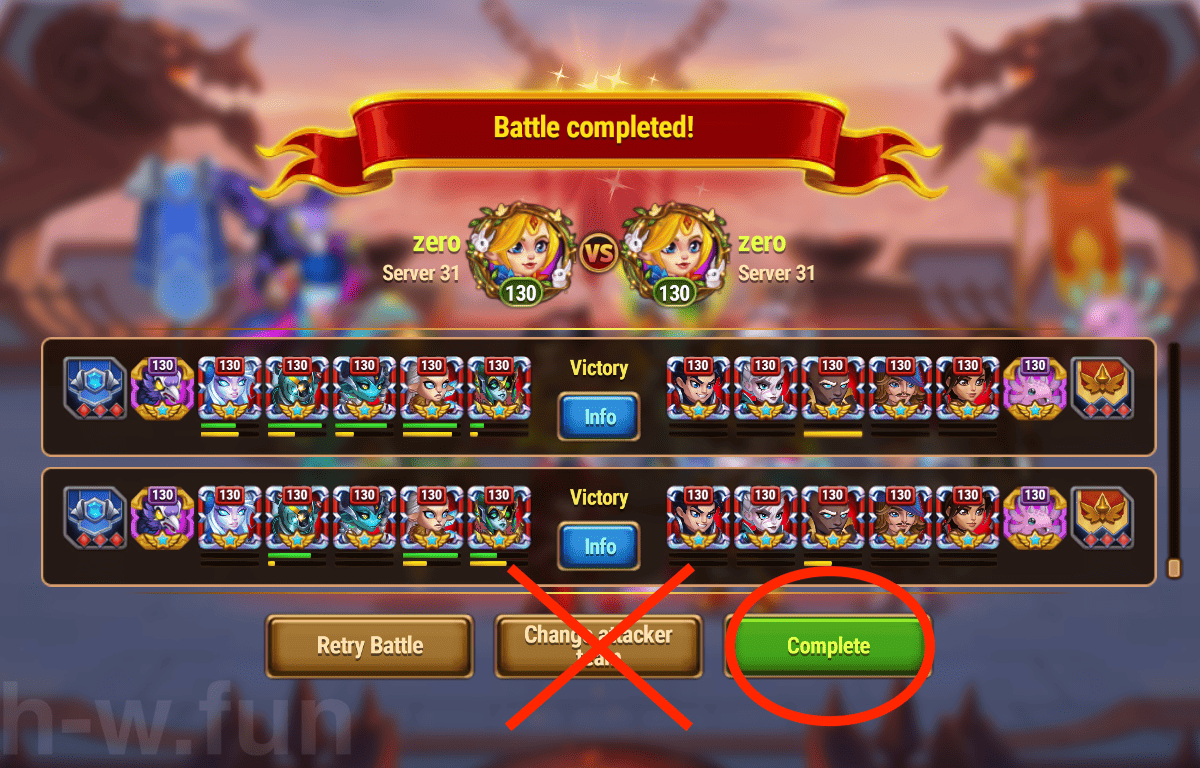
- The Combat Training results screen includes a “Change Attacker Team” button.
- Pressing it generates new Combat Training logs, cluttering the log system.
- This makes it harder for others to find useful logs and is widely considered disruptive.
- While it is a legitimate feature, it annoys teammates.
- Use “Clear” → “Fight Again” instead to avoid generating unnecessary logs.
Hero Combat Training
How to do it
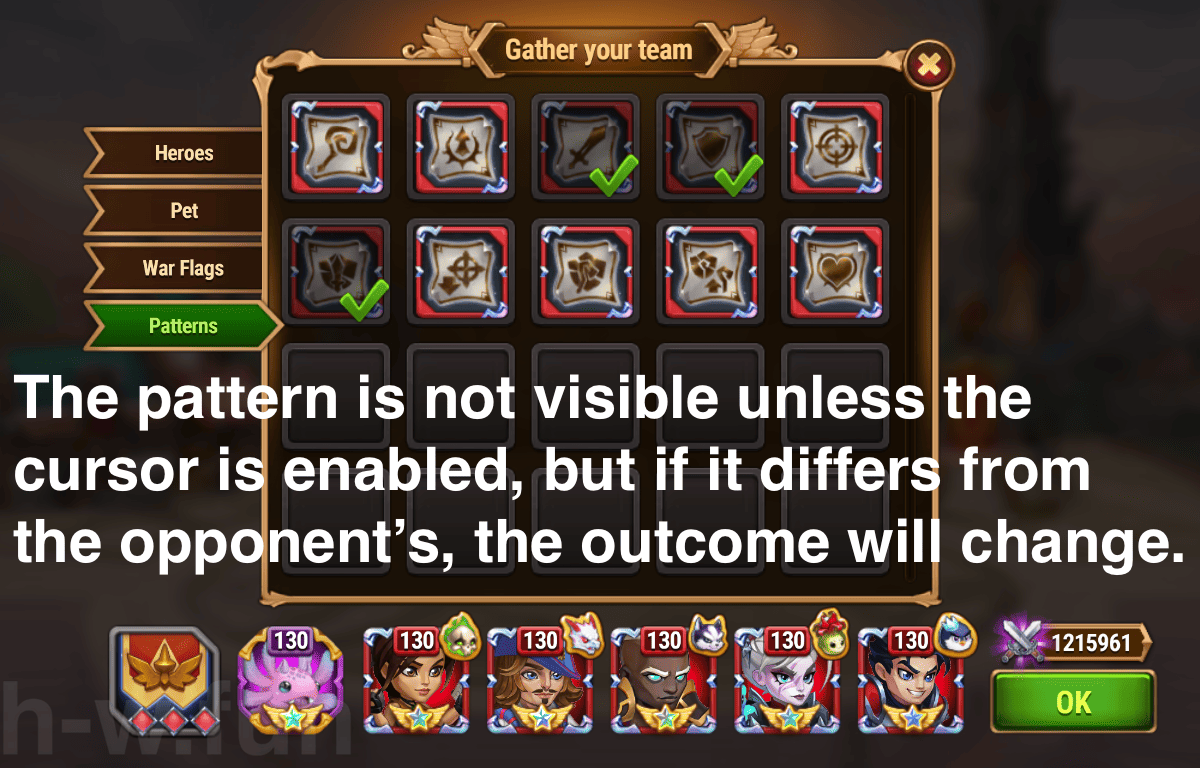
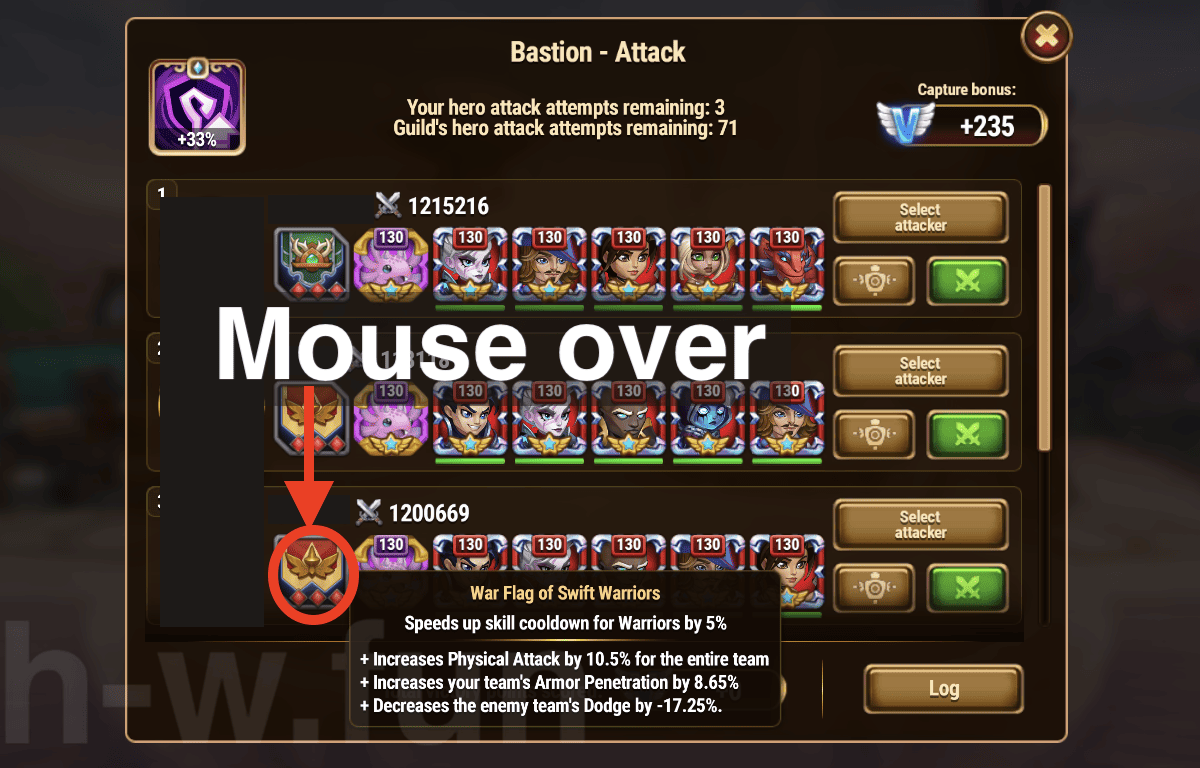
Checking Opponent’s Patterns
Why the Number of Attempts Matters
- In Hero Combat Training, the number of attempts is critical.
- Winning once only proves the attack can win; it may still be a 10% win-rate strategy.
- Large-scale testing reveals patterns:
- Win rates become reasonably reliable after 20+ attempts.
- 50–100 attempts are needed for a margin of error of about ±10%.
- For example, a streak of 20 wins followed by three losses is not unusual.
- Device performance affects testing speed:
- Older devices may take about one minute for 20 tests.
- Modern devices with strong RAM and CPUs can complete the same tests in about 20 seconds.
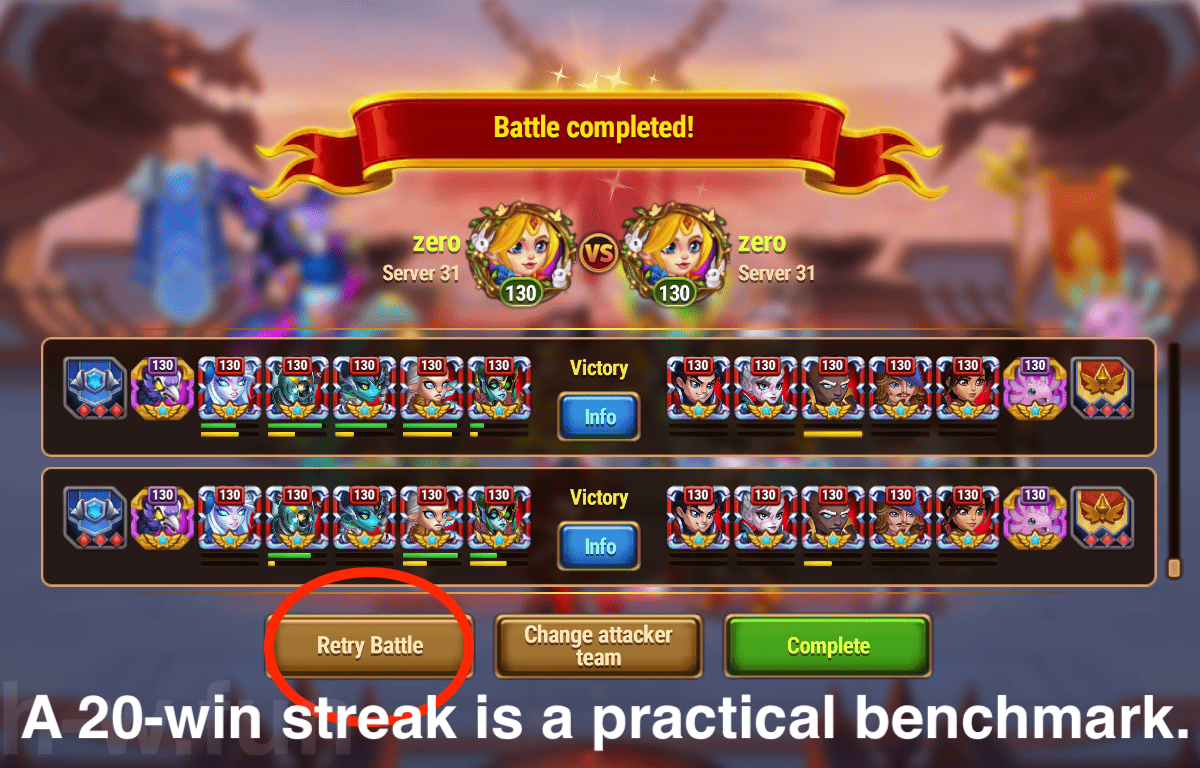
How Many Attempts Are Enough?
- Personally, I use “20 consecutive wins” as my benchmark.
- Beyond that, the trade-off between verification time and improved reliability becomes inefficient.
- Top players may aim for 50+ consecutive wins, as they rarely lose in actual battles.
Pet Considerations
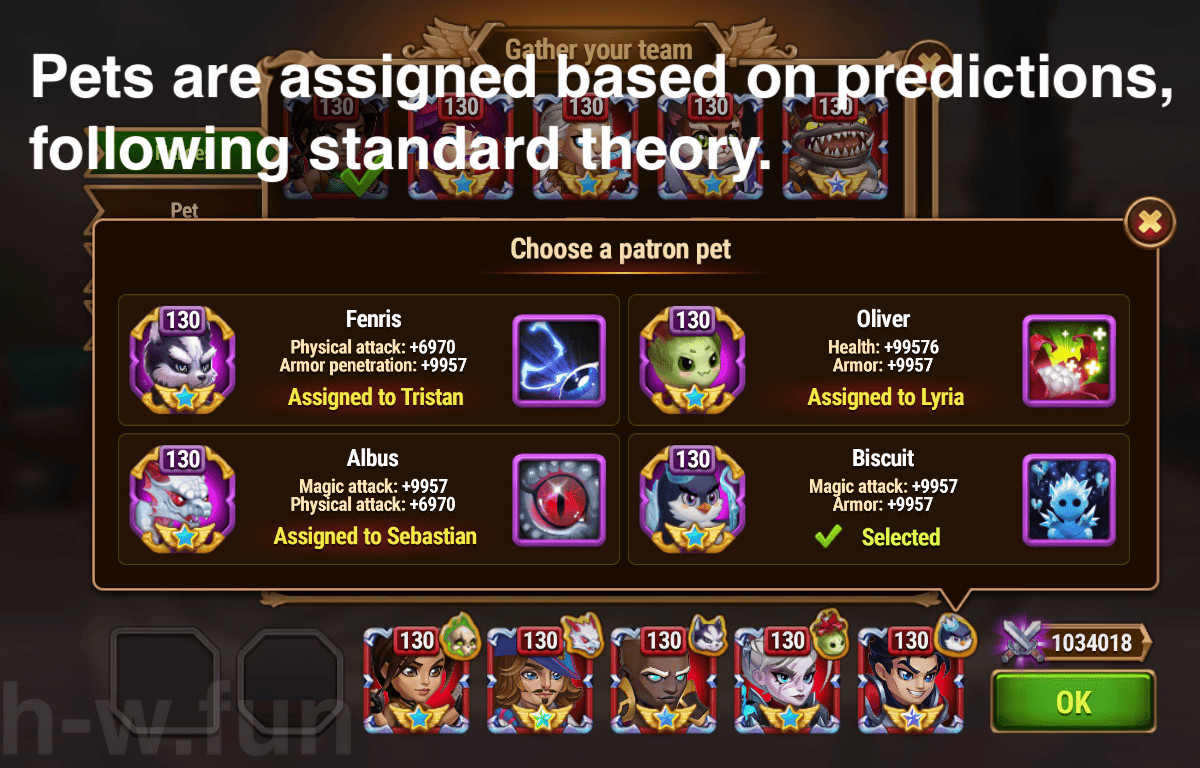
- Effective Combat Training requires predicting pet patron assignments.
- Beginners should start with theory.
- For example, Arachne is usually patroned by Mara.
- Begin by testing based on these common assumptions.
- Reading logs before training is also important.
- In CoW, pets cannot be shared across defense lines.
- Recent Guild War logs are useful for identifying likely pet assignments.
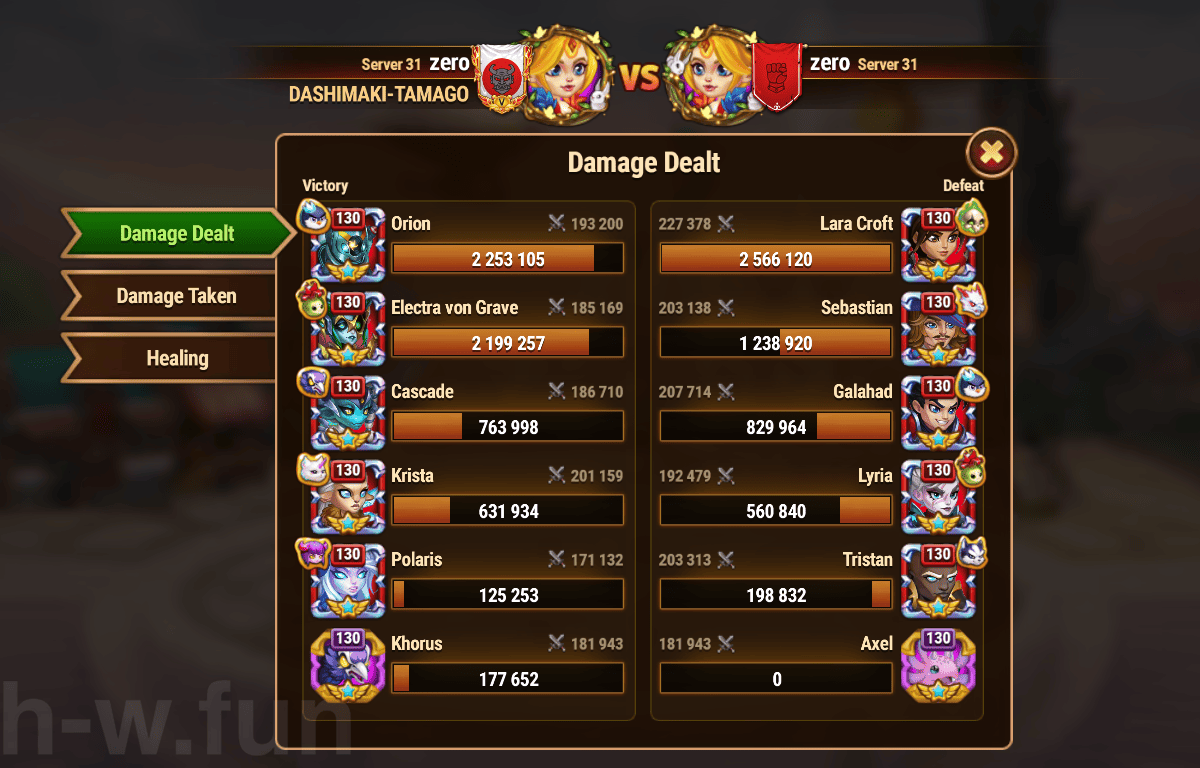
When Pet Patterns Dramatically Affect Outcomes
- Certain pet choices are powerful defensive tactics.
- Examples:
- Dante with Cain vs. Fenris
- Lara Croft with Mara vs. Vex
- Some attacks only work against one specific pet setup.
- Experienced players refer to these decisive differences as “pet patterns” and test each one separately.
When Flags and Patterns Change Everything
- Opponent flags and Patterns typically affect win rates by around 10%, but in some cases can turn a 90% win rate into 20%.
- Common examples:
- Preparation flags paired with Lara Croft in the last slot
- Iceberg flags against teams that rely on long battles
- Pattern-related failure cases include:
- Physical teams without penetration vs. Armor Patterns
- Magic teams vs. Magic Defense Patterns
- Sebastian vs. Critical Defense Patterns
- Dante or Aurora vs. Dodge Inhibitor Patterns
- These counter interactions can cause sudden failure spikes, making Combat Training essential for detection.
Titan Combat Training
How to do it
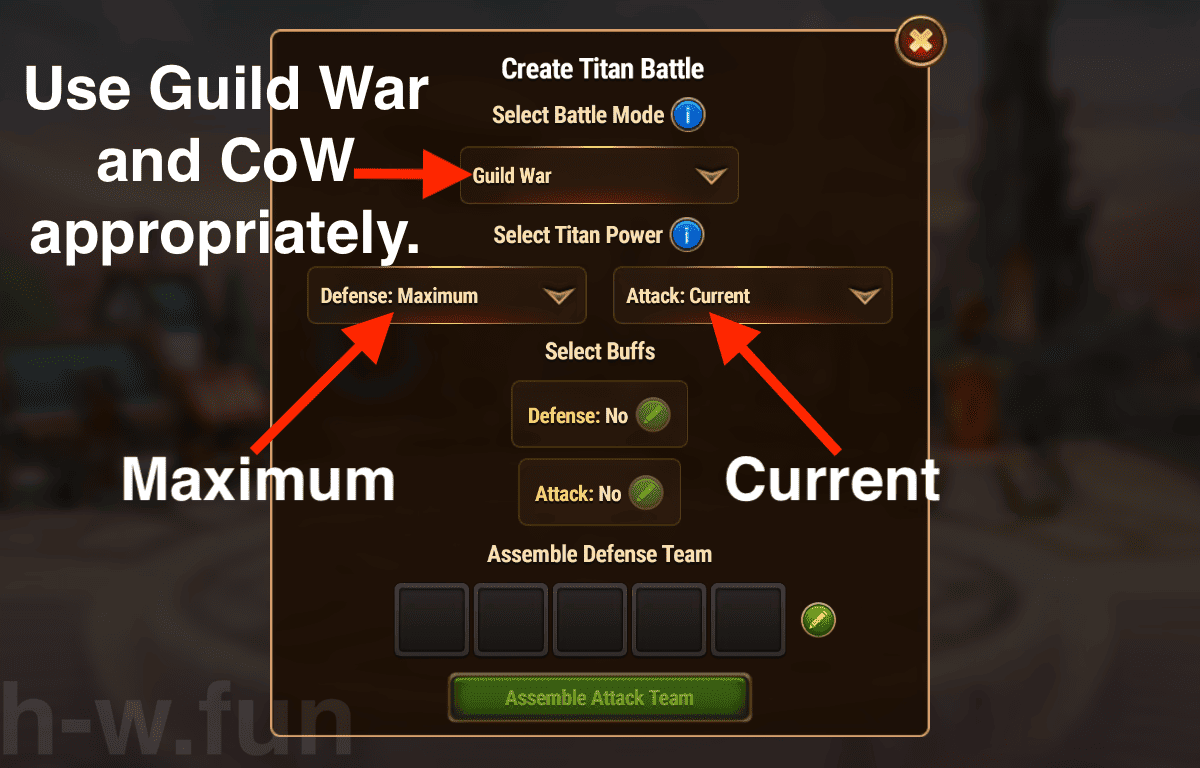
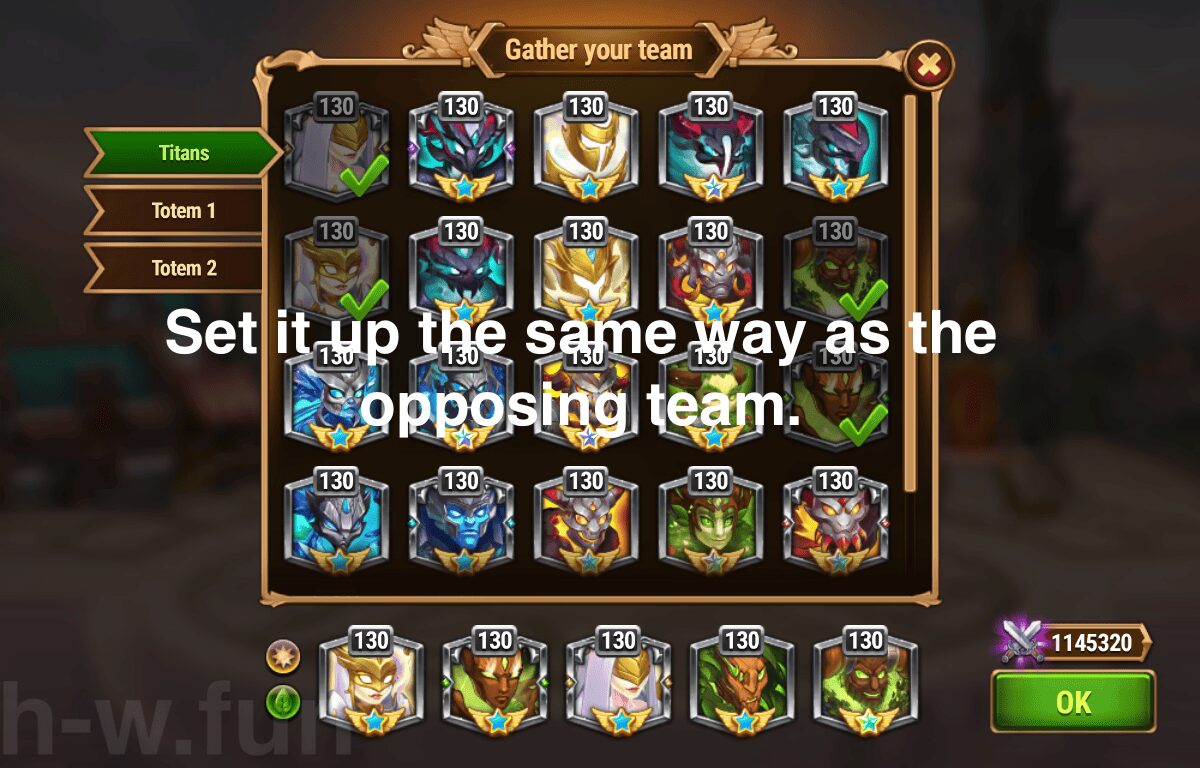
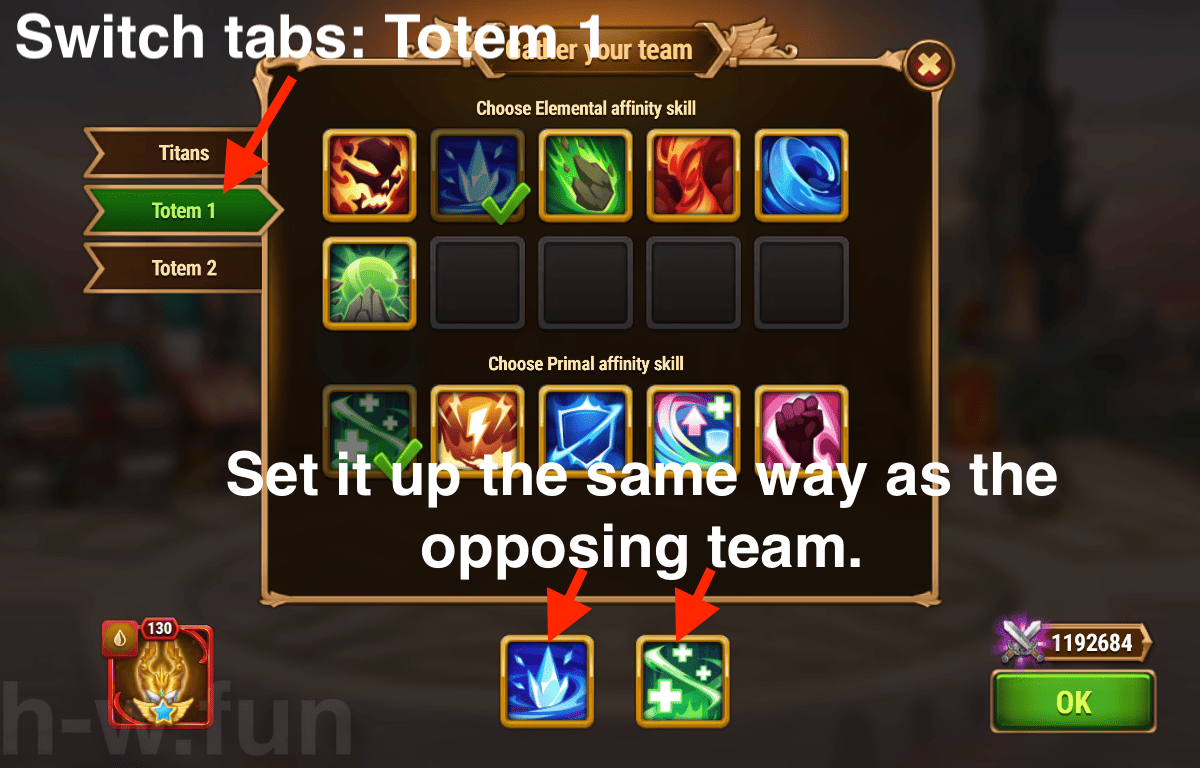
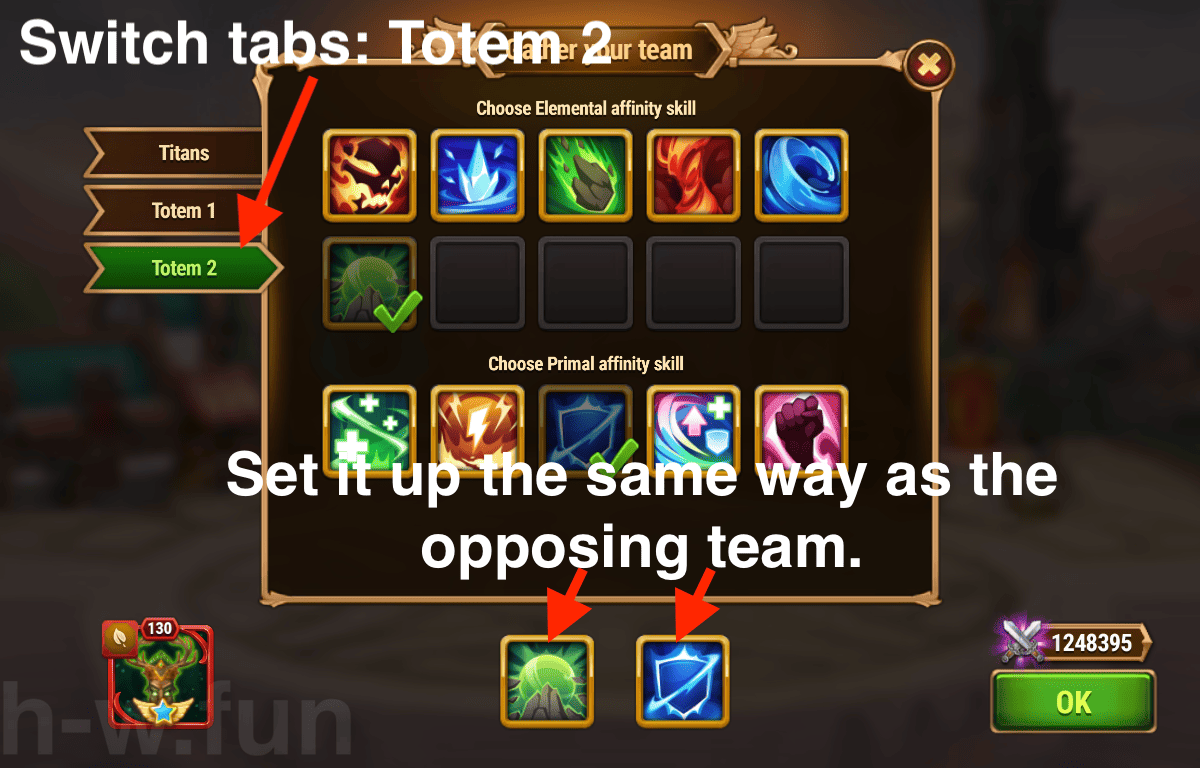
Checking Totem Fusion Skills
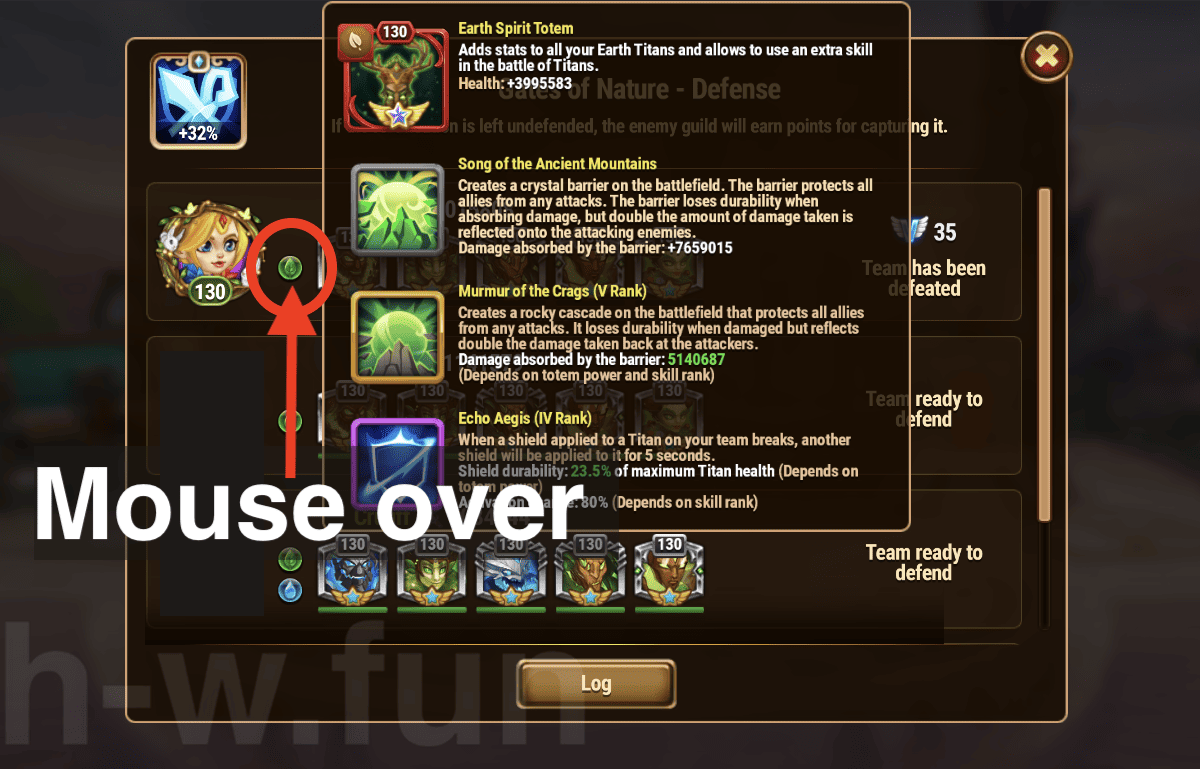
Attempt Count in Titan Battles
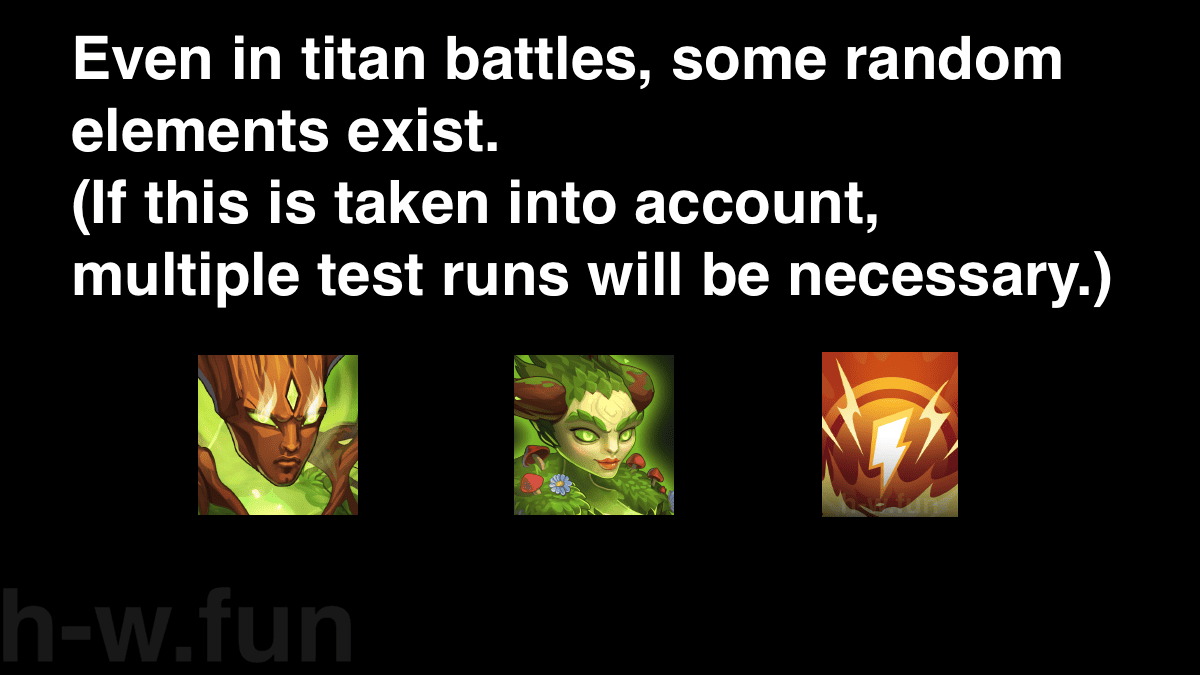
- In Titan Combat Training, the number of attempts matters less due to limited RNG.
- However, several random factors still exist—especially with Eden.
- Who Eden buries, and in what order, can completely change the outcome.
- Top Titan players manually adjust strategies based on each possible pattern.
- If you do not want to analyze every pattern, running around 20 tests is a reasonable compromise.

Manual Control Is Crucial
- Titan battles have low RNG but extremely high dependence on manual control.
- Many teams win by adjusting totem activation timing by a small margin.
- Combat Training is essential for practicing manual execution until it becomes consistent.
- Note:
- Some Titan battles can be won fully on auto if no buffs are involved.
- Choose whether to specialize in manual play with limited teams or optimize compositions for auto wins. Develop your own style.
Titan Battles Require a Margin for Error
- In titan battles, the timing of skill activation can drastically change the outcome, especially when power differences are involved. While this effect cannot be completely eliminated, effective countermeasures do exist.
- One approach is to attack with an elemental advantage whenever possible. Compared to attacking with a disadvantageous element, the impact of power differences is generally reduced.
- Another approach is to choose a winning pattern with a larger margin for error when multiple viable options exist.
- This can be done by comparing battle results and selecting the pattern that leaves your team with more remaining Health, making it more resilient to timing variance.
![[Hero Wars Guide]Guild Wars](https://h-w.fun/en/wp-content/uploads/sites/2/2026/01/Hero-Wars-Guide-Guild-Wars-Strategy_11.jpg)
Fusions Change Everything
- In Titan battles, Totem fusions, especially Primal Skills at level 3+, can significantly alter winning conditions.
- Even if a defense team appears identical, different Primal Skills require the correct fusion to be configured in Combat Training.
- Losing to a defense team you normally beat is often caused by fusion differences.
- This is not bad luck—you will continue to lose unless you adapt.
Clash of Worlds: Buff Bases
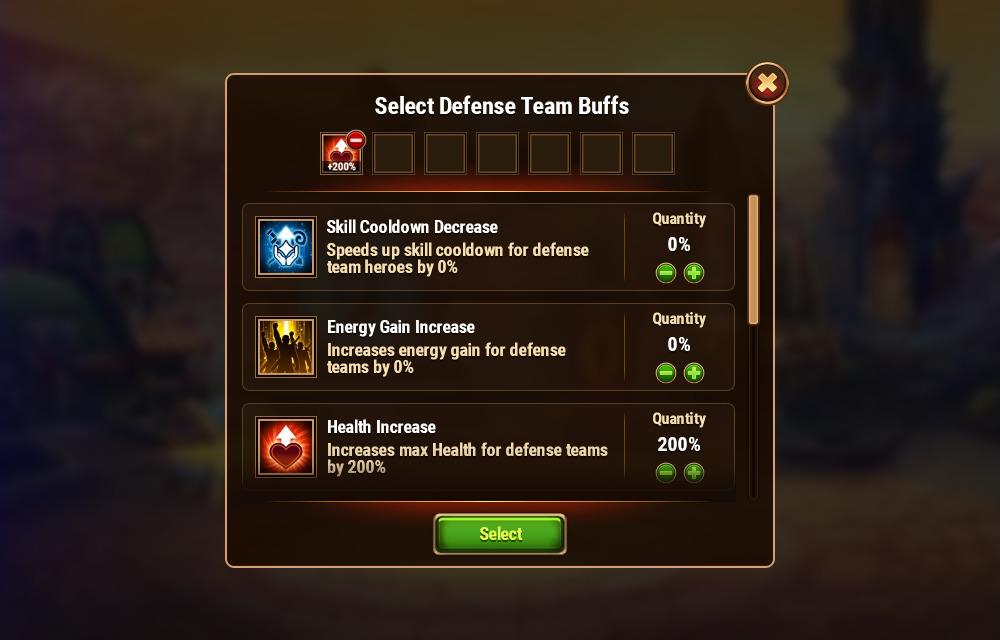
- Clash of Worlds (CoW) features a variety of buffed bases. Depending on the type and strength of the buffs, attacks that were previously effective may no longer work.
- Even the same buff can produce different results when its value changes. For example, engineers often fill four slots with weak teams and reserve one slot for a strong formation.
Compared to a base where all five slots are filled with strong teams, this setup can be significantly harder to defeat.
Do not underestimate such bases just because a similar setup worked before—you may find yourself completely unable to win. - As buff values increase, overall difficulty rises, but buffs can also alter the flow of battle in unexpected ways.
For instance, an attack team that performs well against an unbuffed Lighthouse or Fortress may reliably defeat a buffed Fortress, yet lose to the same team placed on an unbuffed base.
Even when facing the same defensive lineup, differences between buffed and unbuffed placements can lead to entirely different outcomes.
For this reason, it is safest to run separate Combat Training tests for each scenario.

Checklist
While you’re still working toward mastering Combat Training, use the following checklist to refine your mechanics and strengthen the foundation of your playstyle.
Hero Battle Checklist
- Select the correct battle mode.
- Make sure to configure pets and emblems for the opposing team, as these directly affect the outcome.
- Run a sufficient number of test battles. Without enough attempts, Combat Training is meaningless. At least 20 attempts are recommended.
Titan Battle Checklist
- Select the correct battle mode.
- Ensure that Totem Fusion is properly set for Totems 1 and 2 on the opposing team, as different fusion skills can produce very different results.
- If Eden is present, failing to account for burial (filler) patterns turns the battle into a matter of luck. Attacks that only win against a single pattern typically have a 4%–20% win rate.